
Bollocks and Belonging
Rhetoric and writing: LinkedIn cobblers, vertical silos, liminal identities

I can boast of few achievements in what LinkedIn would call “the tech space”, but there’s one of which I am proud. Not long after I opened my gmail account, I spent most of an afternoon figuring out how to set up an automatic filter which sends every incoming email with the string “LinkedIn” anywhere in it directly to the bin. No single action, I think, has more improved my outlook on life or my productivity. Nobody who “wants to connect” (ugh) with me can. I like to think that the discerning readers of The Pharmakon will have done the same, and will consider it a quiet triumph therefore if this newsletter doesn’t get a single reader.
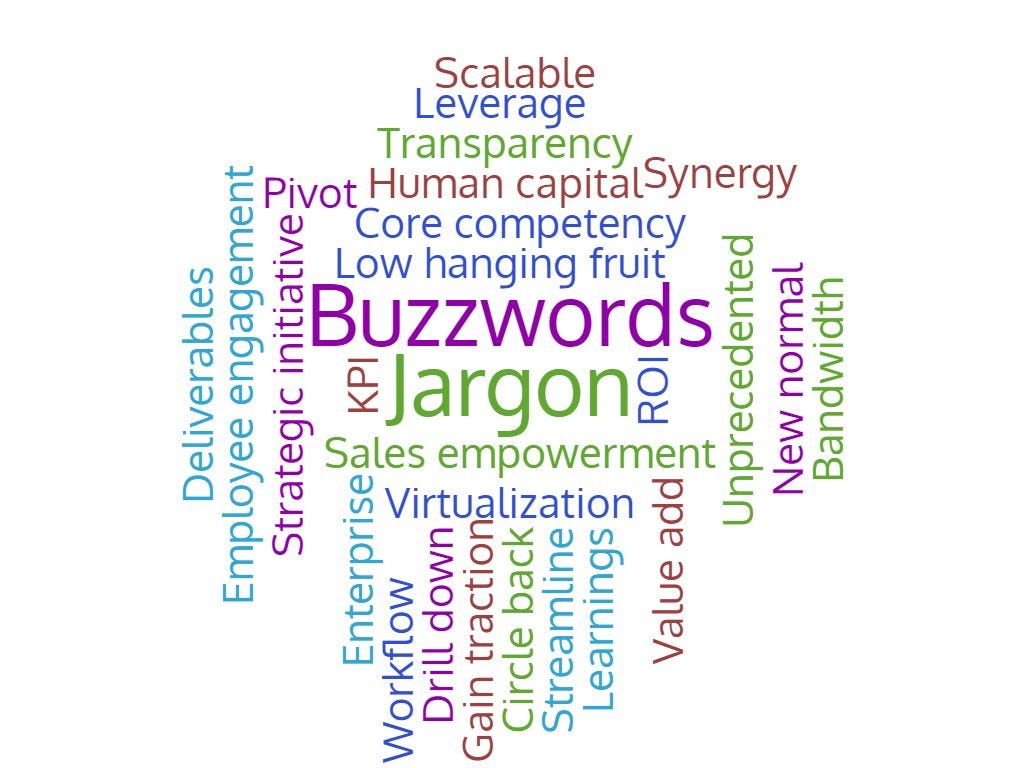
Apart from its spamminess, and the camelcase name, the main irksomeness of LinkedIn is that it’s a gusher of management jargon, aka business buzzword bollocks. I hate that stuff; as you’d expect me to, being in the journalistic and literary end of things — the former prizing direct communication and the latter prizing originality of expression. I confess to taking against Will Lewis, when he was briefly my editor at the Daily Telegraph, because he burbled on about “vertical silos” and “optics” in editorial conference. The only optics I thought a journalist should be interested in were the ones behind the bar in a pub.
So, obviously, three cheers for the findings of this investigation, which discovered that “employees who responded warmly to management jargon scored lower on tests of analytical thinking and problem solving. They were also more likely to make poor calls when presented with practical workplace dilemmas.” If you think that “leverage” is a better word than “use”, or that it makes you sound impressive to talk about “socialising the learnings”, in other words, you’re more likely to be a bit dim.
This shouldn’t surprise us. As has long been argued, cliches, buzzwords and second-hand language do your thinking for you. They’re an indicator that the writer isn’t paying proper attention to what they’re trying to express. Mixed metaphors likewise: if you aren’t thinking about what a metaphor literally means, or how it corresponds to its object, you’re likely to find yourself writing about gathering storm clouds sealing someone’s fate1 or something that’s simultaneously becalmed and up in the air.
Writing is thinking. “How can I know what I think until I see what I say?” and all that jazz2. That’s one of the strongest arguments against using AI to write for you3. It is, also, why stringing together a flummoxing collection of modish buzzwords in a pitch document is likely to make you stupider and more confused about what you’re trying to achieve, and the recipient stupider and more confused too. So why on earth does this stuff still flourish, even when it is so widely and so roundly pilloried?
Well. It’s not just business people who have their own professional idiolects, even if theirs are most easily mocked. If you hear someone use the word “imaginary” as a noun, give “power” an initial capital letter, or bang on about liminal identities, you can be pretty sure they’re in the social sciences. Submariners will never talk about a “sub” — it’s always a “boat”. Cokeheads these days, I discovered not long ago, now call the thing your gear comes in if it’s not in a baggie a “ticket” — what used to be called “wraps”, and were made out of the pages of glossy magazines, are now made out of lottery tickets (eheu fugaces). I was fascinated to hear, too, that the makers of Succession hired a filthy-rich-people consultant to make sure that the Roy family hit the right linguistic notes (no UHNW, apparently, calls their private jet a “private jet”). And, yes, book reviewers. Nobody uses the phrase “pitch-perfect evocation” outside a newspaper fiction column.
That’s why I think it’s worth pulling back to think about the wider function of business buzzword bollocks. To notice that it impedes original thinking rather than enabling it, and that it is more likely to confuse its reader than otherwise, is in some ways to miss the point. It is not only, or even especially, performing what speech-act theorists call a “constative” role — ie, conveying information about the world. It is, rather, an instance of “phatic” language. It has a social grooming function. Its job is to identify the speaker or writer as someone who is fluent in the impenetrable language of business jargon. It says: “I speak business bollocks too.” All those instances I raise of other professional languages have the same role. It’s the linguistic equivalent of dogs going about sniffing each-other’s arseholes.
My friend Ben Schott, incidentally, has put together a brilliant book in which he investigates the private languages of all sorts of different communities — from sneakerheads and Taylor Swift fans to casino workers and gondoliers. It’s called Schott's Significa: An Unexpectedly Essential Guide to Language and I strongly recommend it. You can hear me talk to him about it here on the Book Club podcast.
In rhetoric, we call this the ethos appeal. It’s identifying the speaker as one of us. As Kenneth Burke wrote in his A Rhetoric of Motives, “You persuade a man only insofar as you can talk his language by speech, gesture, tonality, order, image, attitude, identifying your ways with his.” So the people who use this language may be a bit dimmer, but they’re also likelier to be happier in their jobs, to admire their bosses more, and to be promoted. One of the authors of the study quoted in the Times article said: “Employees who are more likely to fall for corporate bullshit may help elevate the types of dysfunctional leaders who are more likely to use it, creating a sort of negative feedback loop.”
The phatic advantages of business bollocks, in other words, outweigh the constative disadvantages. Tribalism, herd behaviour and risk aversion are far more deeply rooted instincts in us than rational thinking. So rather than being “selected out”, as believers in the principle of natural selection and the survival of the fittest might hope, this sort of cobblers will continue to thrive. I’m still not joining LinkedIn though.
***
My column for the Spectator this week was about how the police investigation into Andrew Mountbatten-Windsor seemed to owe more to Lavrentiy Beria than Inspector Morse.
***
I was in the Telegraph writing about Ben Rhodes’s fine new book tracing the history of the American idea through its great speeches. Edited out, incidentally, was my speculation that its oddly oblique title, All We Say, was chosen because it contains in its sound a ghost of “USA”. I do still wonder about that. Maybe I’ll ask Ben when I interview him in a few weeks.
***
This week’s Book Club podcast was with the wonderful Siri Hustvedt, talking about her new book Ghost Stories — a memoir of her life with Paul Auster and her experience of his death.
***
Finally, anyone read Chinese? I was honoured to be interviewed about my work on children’s writing for the Jiangsu Provincial Writers Association, though I have no idea if I make sense in Chinese. Hope so.
I have never forgotten the biography of Phil Collins I once read which opened a chapter: “The explosive pivot that was to seal the fate of their relationship arrived…”
“All that jazz” is, of course, a cliche. Well spotted. As I argue in my book Write To The Point, cliches and set phrases do have value as a way of telegraphing an uncontroversial idea and so lightening the cognitive load of the reader. Proverbs and commonplaces occupy this territory. “Thin end of the wedge” is a cliche, for instance, but it expresses a particular idea with great economy. Business buzzwords, by contrast, are what you might call cliches of obfuscation.
Peevish sidebar. I have signed up to do a bit of freelance work for a big corporation. The people there seem super nice and smart, but lordy be — the bureaucracy! I’ve already signed a multi-page contract, but it turns out that’s just the first part of an “onboarding” process that involves signing up with something called a cloud-based supplier management tool. The web form is a complete nightmare to fill out, opening a ticket involves getting multiple AI-generated emails, and the technical support guys eventually spent the best part of an hour with me on the phone before admitting that they didn’t know why their own software wasn’t working. And the website for this management tool is just saturated with management bollocks, most of it apparently written by the same AI that they are so proud of. “Experience Agentic Intake & Orchestration With GEP Quantum Intelligence”, indeed. Whatever happened to doing a job for someone then sending them an invoice?
Ah, this made me laugh out loud! It actually did.
You’ve inspired me to filter your newsletter to a FOSL folder. What a fun and interesting discussion with Ben Schott. Can’t wait to read his book.