
Tricola
Rhetoric; not the Pepsi Challenge

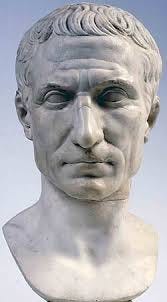
Why is it that the human brain and the human ear like things that come in groups of three? When I was researching my book on rhetoric, I did make a few approaches to neuroscientific types but didn’t, disappointingly, end up with much in the way of a sciencey-sounding result.
Broadly, we’re pattern-seeking animals with limited working memories, and three things sounds to us a bit like evidence of something. As has been said (pleasingly, in group-of-three format): “Once is happenstance, twice is coincidence, three times is enemy action.” As a result, putting phrases or ideas in groups of three has been a mainstay of persuasive language since our ancestors were swanning around in bedsheets.
As I wrote here a couple of weeks ago, Keir Starmer was at it in his resignation speech — “politically, financially and morally bankrupt”; “the economy, defence, and national security”; “decency, respect and the rule of law”; “commitment, service and support.” So was Nigel Farage this week. He spoke of wanting to be a self-regulating nation that makes its own laws, charts its own destiny, and […] controls its own borders.” He asked: “Do we want leaders that have run businesses, employed people, and understand how the world works?” He declared: “I will not tolerate intimidation of my family. I will not tolerate the location of where they live being revealed. I will not tolerate any of my family being endangered because of what I choose to do in public life.”1
The technical term in rhetoric for making groups of three is the tricolon. It’s one of the basic building blocks of oratory. Once you’re tuned into them, you see them everywhere. The holotype example is the exclamation credited to Julius Caesar: “Veni, vidi, vici” — “I came, I saw, I conquered.” But as I’m fond of pointing out, the same trick is being applied when we’re told “Buy it, get it, Argos it.” Or in Superman’s pledge to uphold “truth, justice and the American way”. Or — a sort of tricolon degree zero — in Tony Blair’s “Education, education, education.”
It’s worth noticing that sometimes even when a speaker doesn’t use a tricolon, so powerful is our appetite for groups of three that we will retrospectively edit what they said into one. Winston Churchill actually spoke of “blood, toil, tears and sweat”. Posterity has improved that by remembering “blood, sweat and tears” — which is not only a pleasingly cadenced tricolon but has a metaphorical coherence the original didn’t. “Toil”, the bit we forget, is the odd one out because it isn’t a bodily fluid. Tricola that really work usually have something other than mere adjacency to bind their three terms together.
For those who are looking for a bit more detail so as to show off at dinner-parties2, a distinction is made between tricolons. There’s the tricolon crescens, or “rising tricolon” — where the tricolon builds as it goes. Or the rarer tricolon diminuens — “falling tricolon” — where the opposite is the case.
Most rising tricola3 do tend to build in strength of meaning and move from the concrete to the abstract — you’ll sound a bit limp if your peroration declares your love for “these glorious United States, the great state of Minnesota and the city of Minneapolis” rather than the other way round. But the “crescens” part, technically, refers to a feature of prosody. It means that the final term of your tricolon is longer: it has more syllables in it. So in English, Caesar’s boast is a rising tricolon. In Latin, it isn’t.4
That’s a pointer, it seems to me, to something really important: the main effect of a tricolon is how it strikes the ear, not how it strikes the brain. Like so much in oratory. sound effects trump logical sense.
To show how much that is the case, I’d like to present my favourite tricolon of the 21st century and one that I doubt will be bettered. It comes from the then shadow foreign secretary Douglas Alexander, in an article he wrote opposing Scottish independence in 2014.
By way of establishing his ethos appeal5, he told readers:
“I am Scottish by birth, by choice and by aspiration.”
Classic tricolon crescens, right? We can applaud the zeugma — where “I am Scottish” governs the three parallel terms that follow. We can note the anaphoric pleonasm — where he inflates the grandeur of the phrase by repeating the word “by”.
And while we’re doing all that, we can easily miss the fact that this phrase is absolute nonsense. If you’re born Scottish, you didn’t have a choice in the matter. So you can’t then choose to be Scottish. And if you aspire to be Scottish, that tells the reader that you’re not Scottish but wish you were.
In other words, he was simultaneously telling us in the pages of a national newspaper that he had no choice but be Scottish, that he chose to be Scottish, and that he wasn’t Scottish but hoped to be Scottish one day. Did he get mocked for this at the time? Only by me.
Everyone else will simply have heard three positive mentions of Scottish identity in a row, while the pleasingly lulling rhythm anaesthetised the part of the brain that might notice that these three things contradict rather than reinforcing each other. Meaning, as T S Eliot said, is the bone the burglar throws to the dog. The work of a tricolon is done, mostly, by its sound.
***
***
And this week’s podcast with with Dave Eggers about his delightful and moving new novel Contrapposto. I’m pleased to say — though this didn’t make it onto the tape — that Dave responded well to my Dinosaur Jr t-shirt and that we had a very nerdy pre-recording conversation about the importance of Where You Been and the formative effect on Dave of seeing a Sonic Youth/NWA double-headliner in Chicago as a teenager.
***
I’ve been reading a lot of nonfiction, too, at a hell of a clip, for the triaging stage of the Baillie Gifford prize. Gosh, the “nonfiction thriller” is having a bit of a moment, isn’t it?
Here the tricolon is given extra oomph with anaphora — the repeated words (“I will not tolerate…” at the beginning of each part.
The main reason anyone studies rhetoric, obviously
I’m using this fussy plural to make the joke in my headline work. Tricolons is fine.
It’s isocolon — another rhetorical effect, where you use clauses or speech-units (cola) of the same metrical length.
The was a speaker pitches for an audience’s trust. In politics, that usually stands for identification: I’m one of you; I speak your language; I’m on your side.
Enjoyed that, especially the mention of Where You Been, one of a handful of tapes I had on repeat in the mid-teen phase (and obviously their best album)
This one's spectacular, Sam, thanks!
(As a copy editor, I note that writers overuse what I always call The Rule of Three almost as much as they overuse the "not only X but Y" construction.)